
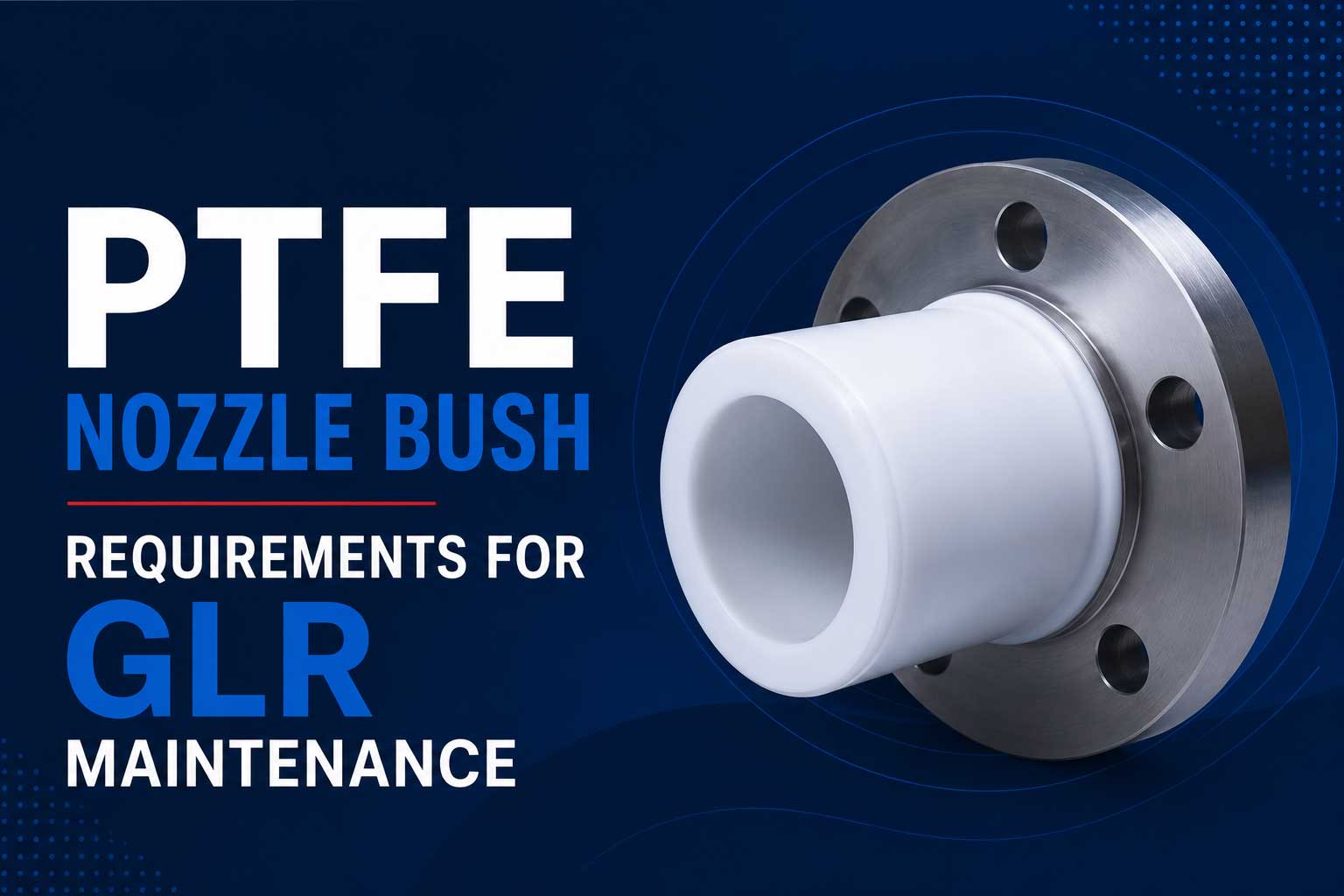
Introduction: Why Nozzle Bush Selection Impacts GLR Performance
In Glass Lined Reactor (GLR) maintenance, nozzle areas are among the most failure-prone zones due to mechanical stress, chemical exposure, and thermal cycling.
Selecting the right PTFE nozzle bush is critical to ensure leak prevention, glass lining protection, and long-term sealing reliability.
Key Requirements for PTFE Nozzle Bush in GLR Systems
| Requirement | Importance |
|---|---|
| Chemical Compatibility | Resists acids, solvents and corrosive chemicals |
| Dimensional Precision | Protects glass lining and ensures fitment |
| Thermal Stability | Operates from -200째C to +260째C |
| Mechanical Integrity | Handles compression loads and pressure |
Chemical Compatibility
PTFE offers near-universal resistance to acids, solvents and aggressive media making it ideal for GLR environments.
Dimensional Precision
Accurate tolerances ensure proper fitment and prevent stress on glass-lined surfaces.
Thermal Stability
PTFE performs reliably across a wide operating temperature range.
Mechanical Integrity
High-quality PTFE bushes resist creep and maintain sealing performance.
Common Failure Risks
- Glass lining damage at nozzle interface
- Leakage due to improper sealing
- Frequent maintenance shutdowns
- Increased lifecycle cost
Best Practices for GLR Maintenance Teams
- Verify material grade (Virgin vs Filled PTFE)
- Check machining precision and finish
- Ensure flange compatibility
- Inspect before installation
Conclusion
In 2026, GLR reliability depends heavily on component-level precision. PTFE nozzle bushes are critical engineered components that directly affect sealing performance, equipment protection and long-term reliability.
Need Precision PTFE Nozzle Bushes?
Contact Fluoro Polymer Products for custom-engineered PTFE nozzle bushes for Glass-Lined Reactors and vessels.